Most of us know we’re supposed to brush twice a day, floss regularly, and visit the dentist for cleanings. But have you ever wondered what a professional dental cleaning actually does, or why it’s important even when your teeth look and feel fine?
Hi! I’m Nicole, a registered dental hygienist at Jade Dental in Ottawa. After 15 years in dental hygiene, one thing I always want people to understand is that taking care of your teeth isn’t just about having a nice smile. It’s about keeping your mouth healthy and supporting your overall well-being.
Let’s talk about why regular cleanings matter, what happens when we skip them, and how something as simple as removing buildup from your teeth can make a real difference.
1. Brushing is important, but it can’t do everything
Even if you’re great about brushing and flossing, some plaque can remain in areas that are difficult to reach.
Plaque is a soft, sticky film of bacteria that constantly forms on our teeth. When plaque isn’t removed properly, it can harden into tartar, also called calculus.
Here’s the important difference:
- Plaque can be removed with proper brushing and cleaning between your teeth.
- Tartar is hardened buildup that cannot be removed with a regular toothbrush or dental floss.
Once tartar forms, it takes professional dental instruments to remove it safely.
That’s where your dental hygienist comes in!
During a cleaning, we carefully remove plaque and tartar from your teeth, especially around the gumline and other spots that are difficult to clean at home.
And although your teeth may feel wonderfully smooth afterward, the biggest benefit is what’s happening to your oral health.
2. What a difference a cleaning can make
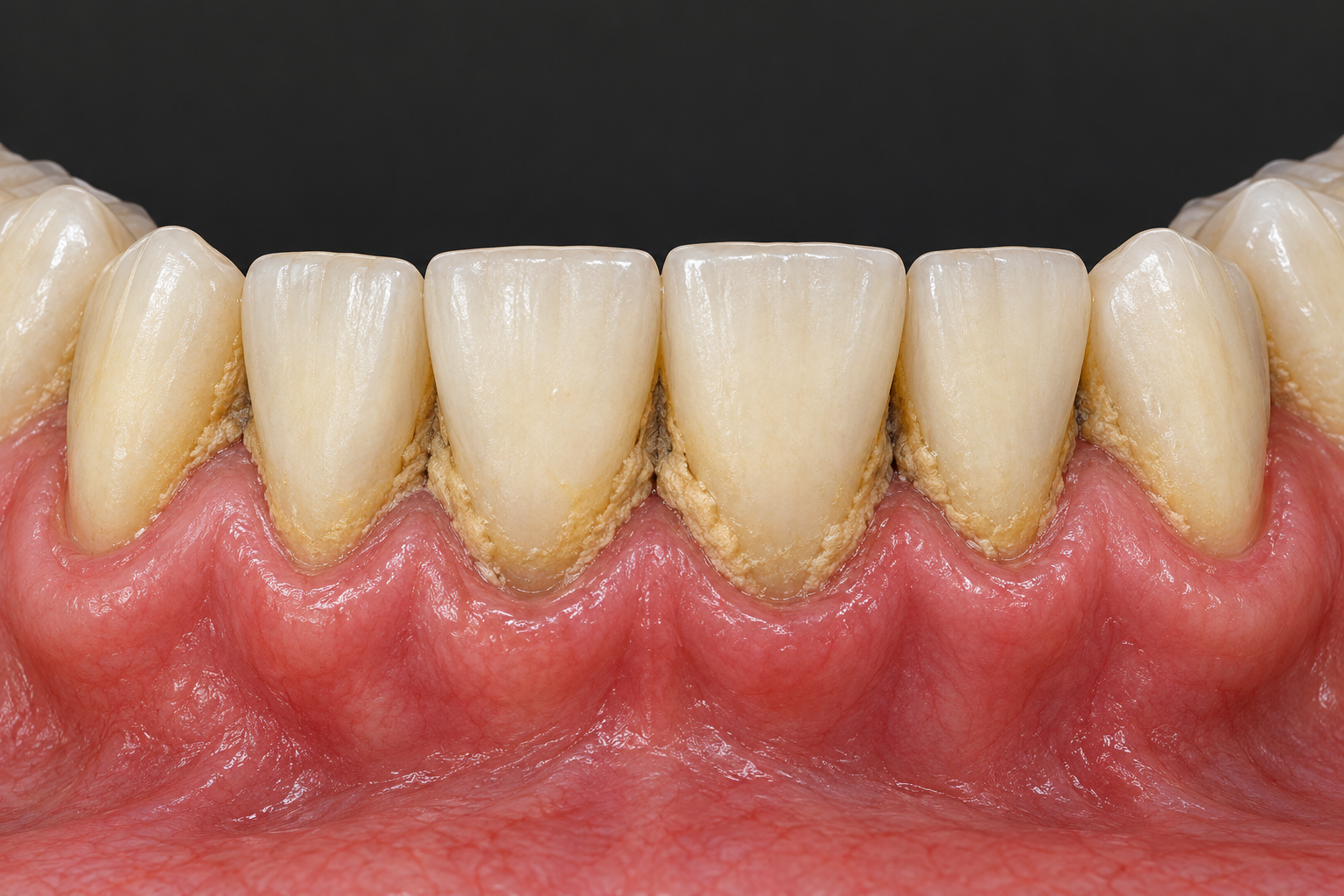
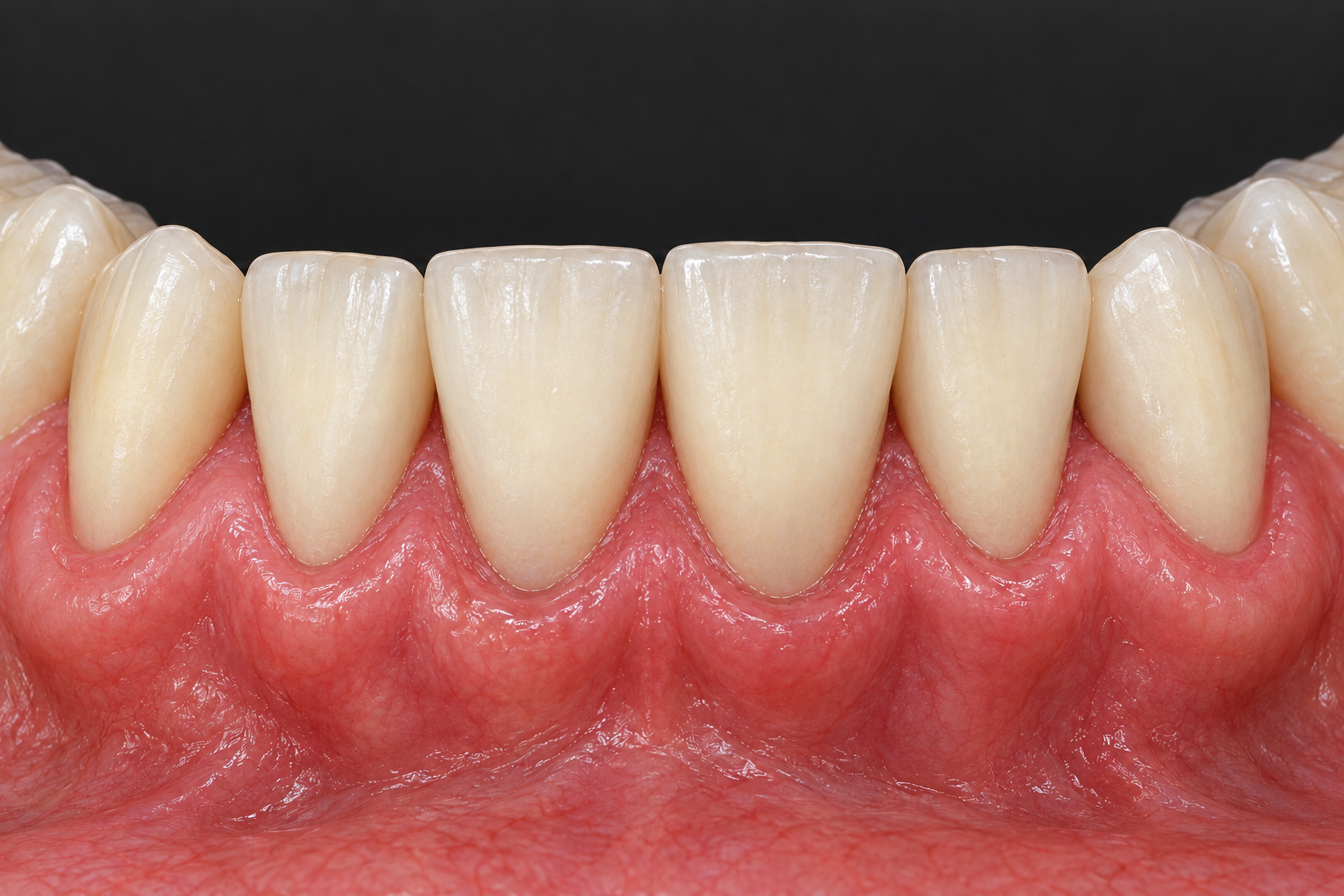
AI-generated educational illustrations, not patient photographs. This comparison illustrates buildup removal; it does not depict whitening, gum regrowth or a guaranteed treatment result.
Sometimes it’s easier to see the importance of dental cleanings than to explain it.
The illustrations above show how removing tartar can change the appearance of the tooth surface.
Notice how tartar can collect around the teeth, particularly near the gums.
Removing that buildup helps make the area easier to keep clean and reduces a source of irritation to the gums.
Keep in mind that a dental cleaning is not the same as teeth whitening. The goal is to remove harmful buildup and maintain healthy teeth and gums, not necessarily to change the natural colour of your teeth.
And there’s another benefit that’s even more important than appearance.
3. Healthy gums are just as important as healthy teeth
One of the main reasons we recommend regular dental cleanings is to help prevent gum disease.
Gum disease often begins with gingivitis, which is inflammation of the gums caused by plaque buildup.
Some common warning signs include:
- Gums that bleed when brushing or flossing
- Red, swollen, or tender gums
- Persistent bad breath
- Gums that appear to be pulling away from the teeth
The tricky part? Early gum disease isn’t always painful. You might not realize something is wrong.
The good news is that gingivitis can often be reversed with proper daily oral care and professional cleanings.
However, if gum disease progresses to periodontitis, it can damage the tissues and bone supporting your teeth. That damage can be permanent, although treatment can help control the disease.
This is why prevention and early detection are so important.
At Jade Dental, we don’t just clean your teeth. We also pay attention to the health of your gums and look for changes that may need further attention.
4. Your oral health and overall health are connected
This is one of my favourite topics to discuss because many people don’t realize how closely their oral health is connected to the rest of their body.
Your mouth is home to many kinds of bacteria. Most are harmless, but some can contribute to tooth decay, gum inflammation, and infection.
Researchers have also found connections between gum disease and certain medical conditions.
Diabetes and gum health
People with diabetes may be more likely to develop gum disease, especially when their blood sugar isn’t well controlled.
The relationship can also work the other way: gum disease can make diabetes more difficult to manage.
Keeping your gums healthy, along with following your medical care plan, is an important part of managing your overall health.
Heart health
Research has found that people with gum disease are more likely to experience certain cardiovascular problems.
However, this doesn’t mean that gum disease directly causes heart disease or that getting your teeth cleaned will prevent a heart attack. Scientists are still studying these connections.
What we do know is that treating gum disease improves gum health, and maintaining a healthy mouth is an important part of taking care of yourself.
Comfort, nutrition, and quality of life
Healthy teeth and gums also help you eat comfortably, speak clearly, and avoid painful dental infections.
When you think about it that way, oral health is much more than a cosmetic concern.
5. How often should you get your teeth cleaned?
You’ve probably heard that everyone should visit the dentist every six months.
For many people, that’s a reasonable starting point, but there isn’t one perfect cleaning schedule for everyone.
Some patients develop tartar more quickly than others. Some have a history of gum disease, while others have relatively healthy teeth and gums.
Your recommended cleaning schedule may depend on:
- How quickly plaque and tartar build up
- Your current gum health
- Your history of cavities or gum disease
- Certain medical conditions or medications
- How effectively you’re able to clean your teeth at home
Some people benefit from more frequent appointments, while others may need them less often.
The important thing is to follow a schedule that’s appropriate for your individual needs.
6. What can you do between cleanings?
Professional cleanings are important, but your daily habits matter just as much.
Here are a few simple things I encourage patients to focus on:
- Brush twice a day for about two minutes using fluoride toothpaste.
- Clean between your teeth daily, using floss or another method recommended by your dental professional.
- Don’t ignore bleeding gums. If bleeding continues, have your gums checked.
- Limit frequent sugary snacks and drinks, which can increase your risk of cavities.
- Keep up with your recommended appointments, even if nothing feels wrong.
You don’t need a complicated routine or an expensive collection of dental products. Consistency makes a big difference.
And if you’re not sure whether you’re brushing or flossing effectively, ask us! That’s exactly the sort of thing we’re happy to help with.
A little prevention goes a long way
After 15 years in dental hygiene, my message is simple: don’t wait until something hurts to start taking care of your oral health.
Regular dental cleanings help remove buildup that you can’t remove at home, support healthier gums, and give your dental team an opportunity to identify potential problems early.
Whether it’s been six months or several years since your last cleaning, the most useful next step is to find out what your teeth and gums need today.
At Jade Dental, our goal is to help you feel comfortable, informed, and confident about your dental care.
You can learn more about dental cleanings at Jade Dental, or contact us to discuss what your teeth and gums need.
If you’re due for a cleaning, we’d be happy to see you!
Book your dental appointment at Jade Dental
Nicole Y., RDH
Jade Dental, Ottawa, Chinatown
The Hygiene Corner with Nicole
This is the first article in our biweekly oral health series. Every two weeks, we’ll explore everyday dental questions, explain common treatments, and share practical advice for keeping your smile healthy.
Sources and further reading
- Canadian Dental Association: Gum Disease
- Canadian Dental Association: Regular Dental Checkups
- CDC: Oral Health and Diabetes
- American Heart Association: Oral Health
This article is intended for general education and does not replace personalized dental or medical advice.